

Black Rhino
Diceros bicornis
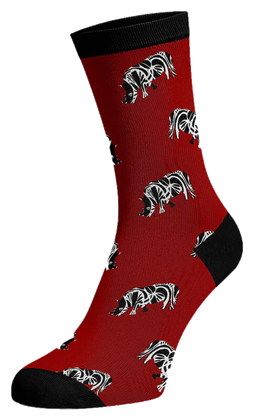
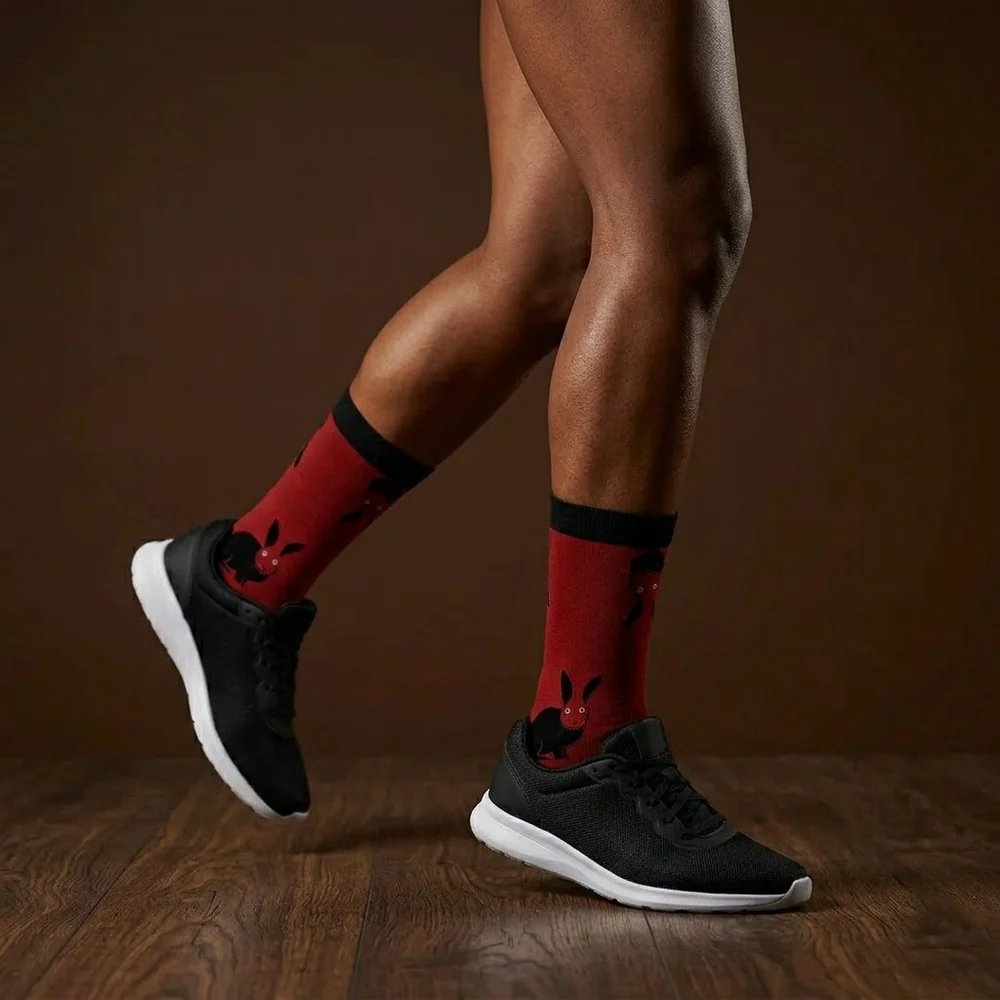
My sock: The Last Stand (red)
Who am I?
- IUCN status
- Critically Endangered
- Height
- 1.4–1.7 m at the shoulder
- Weight
- 800–1,350 kg
- Lifespan
- 30–40 years in the wild
- Diet
- Browser: leaves, twigs and shoots of shrubs and small trees
- In South Africa
- About 2,065 (end of 2023), in 7 of the 9 provinces
- In Africa
- About 6,788 (end of 2024)
How to spot me
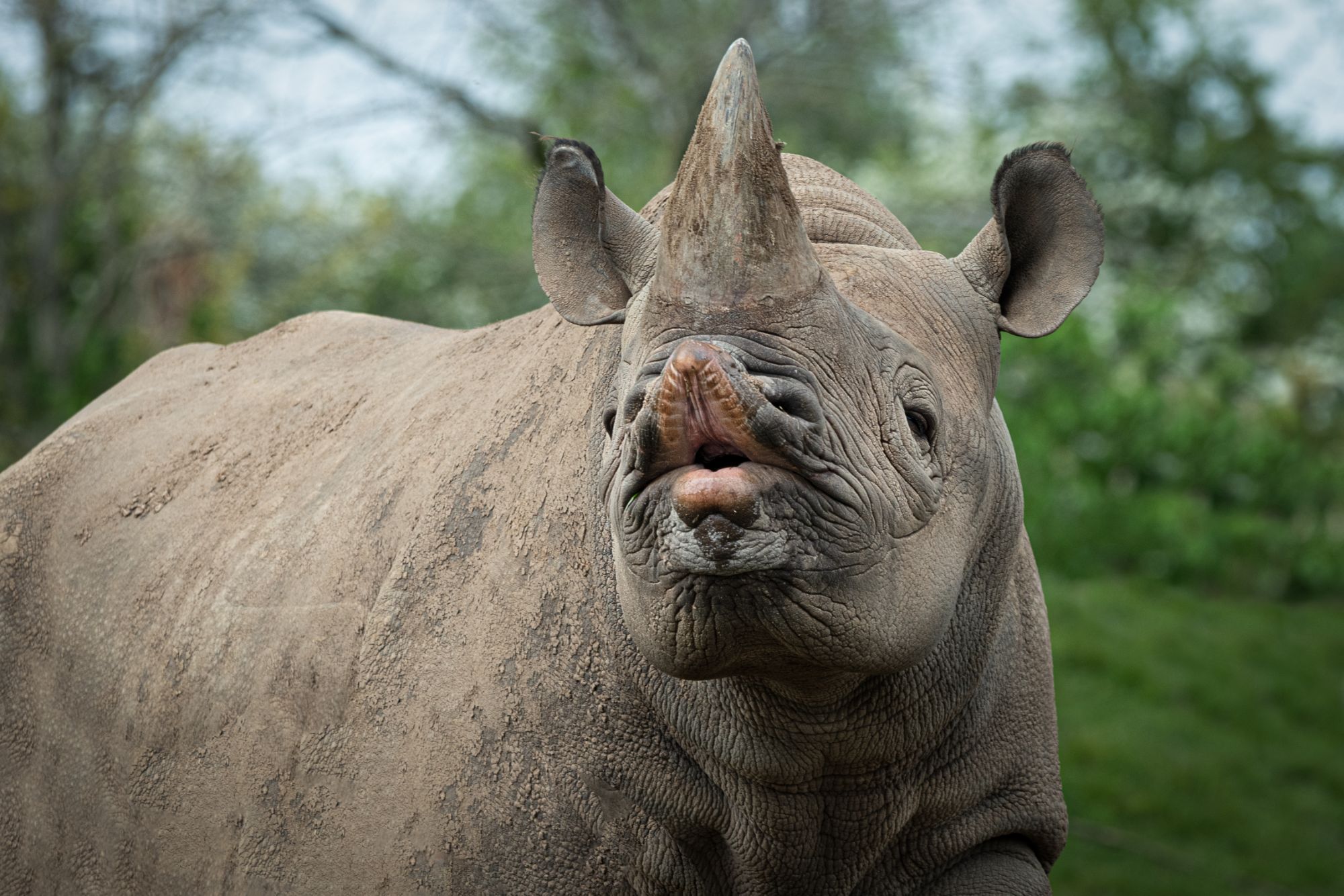
Don't let my name fool you: I'm actually grey. My skin often takes on the colour of the mud I've been wallowing in. I carry two horns: my front horn is 0.5–1.3 m long, and my rear horn can grow up to 55 cm.
The surest way to recognise me is my mouth. I have a pointed, hooked upper lip that works almost like a finger, so I can grasp leaves and twigs and pull them in to eat.
Where I live
I can make my home in a wide range of places, from desert to wetter, forested mountain areas. I do best where 350–700 mm of rain falls a year, and I need permanent water unless there are plenty of succulent plants to eat.
In South Africa I live on more than 69 state, private and community reserves, which together cover less than 3% of the country. Two kinds of us occur naturally here:
- South-central black rhino (D. b. minor): the Lowveld of Limpopo and Mpumalanga, KwaZulu-Natal and parts of North West.
- South-western black rhino (D. b. bicornis): the arid west and south, in the Northern, Western and Eastern Cape.
How I live and what I eat
I mostly keep to myself. If you see a few of us together, it's usually a mother with her calf. How far I roam depends on how much food there is: under 10 km² in rich thicket, 15–60 km² in woody savanna and well over 100 km² in desert.
I'm a browser, and I feed mostly below 2 m. If I eat grass, it's usually by accident.
How I raise my young
A mother carries a single calf for 15 to 16 months. She has her first calf at about 7 years old, then one roughly every 2.7 years, and her calf stays by her side for 2.5 to 5 years. Because we breed so slowly, every one of us lost to poaching is very hard to replace.
What I'm up against
Poaching for my horn is the biggest threat I face. When a mother is killed, her calf is often left alive and alone. But protection works: in South Africa we've grown from about 110 in 1930 to 2,065 in 2023.
How you can help me
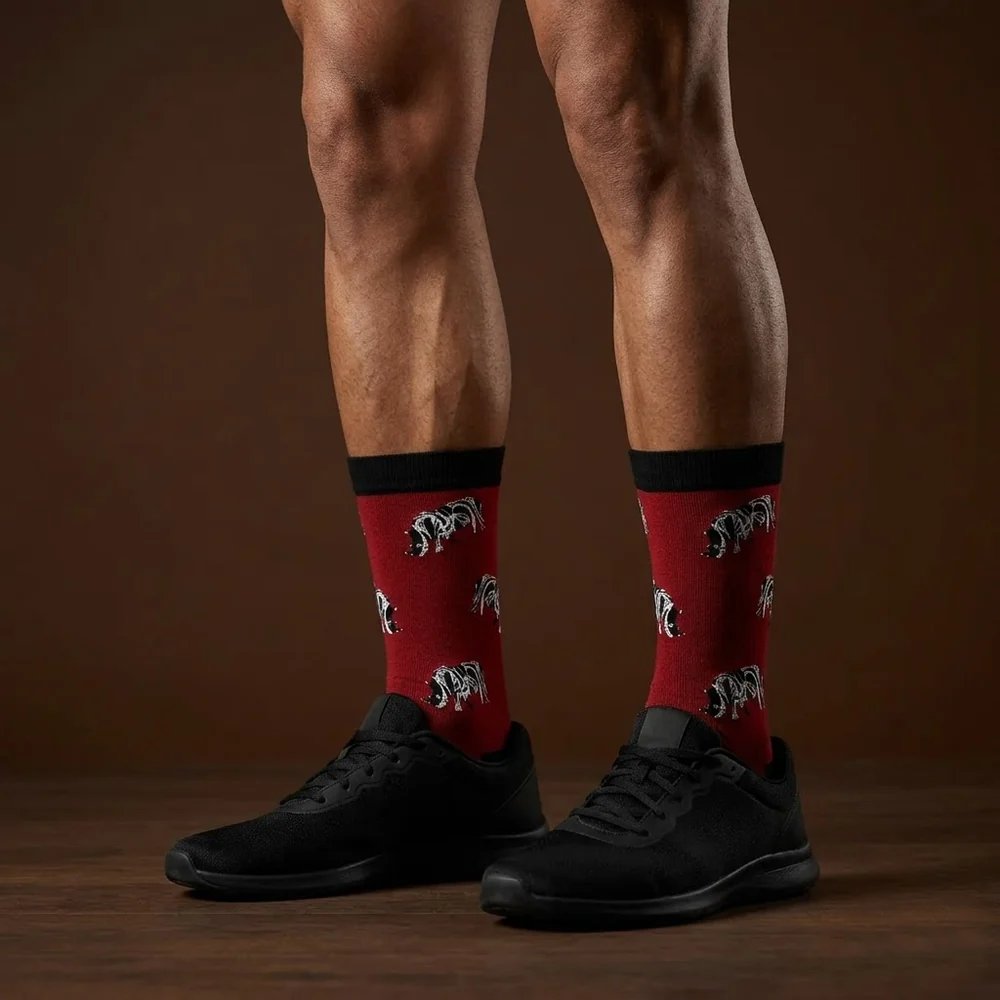
Every pair of my socks sends 5% of the sale to The Rhino Orphanage, which cares for baby rhinos orphaned by poaching. Your pair helps pay for their milk, nutrition and vet care, for anti-poaching protection, and for the gear needed to release them back into the wild.
My socks are red, for Critically Endangered: The Last Stand. Kids, Medium and Large, R190 a pair, or in a Rare Krate gift box from R250.
Sources
- African Rhino Specialist Group, Asian Rhino Specialist Group & TRAFFIC (2025). African and Asian rhinoceroses: status, conservation and trade. Report to CITES CoP20 (Doc. 84, Annex 3).
- South African Scientific Authority (2018, updated 2024). Non-detriment finding assessment for Diceros bicornis. SANBI.
- International Rhino Foundation: black rhino